

R M Tyres - Articles
How to Change a Car Battery and Avoid Common Mistakes
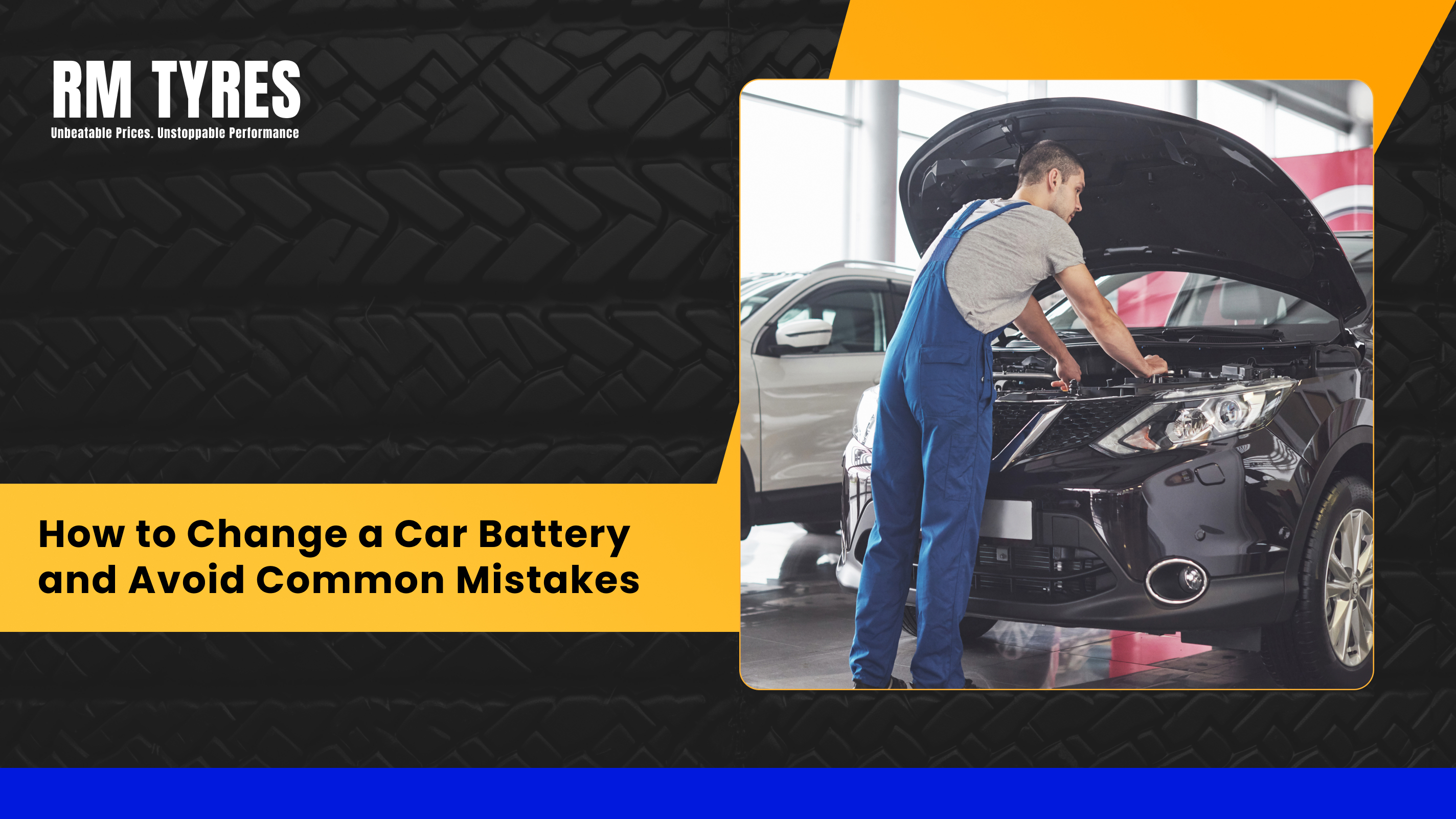
A dead car battery can leave you stranded at the most inconvenient time. While many drivers call for roadside assistance, knowing how to change a car battery yourself can save time, money, and hassle. With the right tools, safety precautions, and step-by-step guidance, replacing a battery is easier than you might think. This guide will help you change your car battery safely and avoid common mistakes that could damage your vehicle or the new battery.
Why Knowing How to Change a Car Battery Matters
Car batteries are essential for starting the engine and powering electrical systems such as lights, wipers, and infotainment. A failing battery can cause:
- Difficulty starting your car
- Flickering lights or dim headlights
- Electrical issues or warning lights on the dashboard
Learning how to change a car battery empowers you to handle these problems quickly and safely. You can also save money by doing it yourself instead of calling a mechanic.
Tools and Materials You’ll Need
Before replacing your battery, gather these items:
- New car battery compatible with your vehicle
- Wrenches or socket set (usually 10–13 mm)
- Gloves and safety glasses
- Battery terminal cleaner or wire brush
- A memory saver (optional, for cars with electronic settings)
Keeping these tools ready ensures the process is smooth and safe.
Step-by-Step Guide: How to Change a Car Battery
1. Park Safely and Turn Off the Engine
Ensure your car is parked on a flat surface. Turn off the engine, remove the key, and engage the parking brake. Safety comes first whenever working with a battery.
2. Disconnect the Negative Terminal
Always disconnect the negative (-) terminal first to avoid short circuits. Use a wrench to loosen the clamp and carefully remove the cable. Place it aside, away from the battery.
3. Disconnect the Positive Terminal
Next, disconnect the positive (+) terminal in the same way. Make sure both cables do not touch each other or any metal surface.
4. Remove the Old Battery
Most batteries are secured with a clamp or bracket. Use the wrench to remove it and carefully lift the battery out of the tray. Be careful, as car batteries are heavy.
5. Clean the Battery Tray and Terminals
Check the battery tray for corrosion, dirt, or debris. Clean it thoroughly. Use a wire brush to clean the cable terminals for better contact and longer battery life.
6. Install the New Battery
Place the new battery in the tray, ensuring the terminals are in the correct orientation (positive to positive, negative to negative). Secure it with the clamp or bracket.
7. Reconnect the Terminals
Reconnect the positive (+) terminal first, then the negative (-) terminal. Tighten the clamps securely but avoid over-tightening, which can damage the terminals.
8. Test the Battery
Start your car to ensure the new battery works correctly. Check headlights, wipers, and other electrical components. Everything should function normally.
Common Mistakes to Avoid When Changing a Car Battery
- Connecting the Terminals in the Wrong Order
- Always connect positive first and disconnect negative first. Reversing this can cause sparks or damage.
- Not Wearing Safety Gear
- Car batteries contain acid that can cause burns. Gloves and safety glasses are essential.
- Forgetting to Clean the Terminals
- Dirty terminals reduce electrical contact and can shorten the battery’s life.
- Using the Wrong Battery Type
- Always use a battery that matches your car’s specifications. Using the wrong size or voltage can damage your car.
- Over-Tightening the Clamps
- Tight clamps are important, but overtightening can crack terminals or damage battery posts.
Tips to Make Car Battery Replacement Easier
- Keep a memory saver to preserve radio, clock, and electronic settings.
- Avoid touching both terminals with metal tools simultaneously.
- Check battery life regularly and replace it before it completely dies.
- Dispose of the old battery safely at a recycling center or authorised dealer.
- Consider professional assistance if the battery is hard to access in modern vehicles.
FAQs : How to Change a Car Battery
Q: How to change a car battery step by step?
A: Disconnect the negative terminal first, then the positive. Remove the old battery, clean the terminals, place the new battery in the tray, reconnect the positive terminal first, then negative, and test all systems.
Q: Can I change my car battery myself?
A: Yes, most car owners can replace a battery safely with basic tools and proper precautions. Make sure to wear gloves and safety glasses to avoid injury.
Q: How do I know which battery to buy?
A: Check your car manual for the recommended size, voltage, and cold-cranking amps (CCA). Using the correct battery ensures optimal performance.
Q: How long does a car battery last?
A: On average, car batteries last 3 to 5 years. Extreme temperatures and frequent short trips can reduce their lifespan.
Q: Can a dead battery damage my car?
A: If left unattended, a dead battery can affect electronic systems, prevent your car from starting, and sometimes damage sensitive electronics. Replacing it promptly avoids these issues.
Conclusion
Knowing how to change a car battery is a valuable skill for every driver. By following proper steps and avoiding common mistakes, you can replace your battery safely and efficiently. Regular battery checks, correct installation, and proper maintenance ensure your car starts reliably every time.
For high-quality batteries, expert installation, and recycling of old batteries, RM Tyres offers trusted solutions to keep your vehicle running smoothly.
